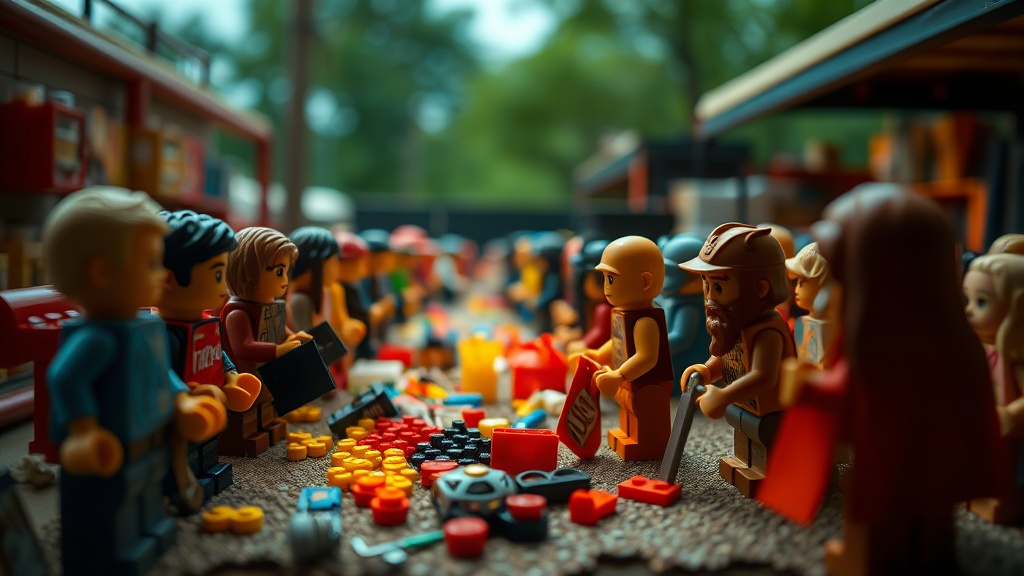
Rare Minifigures Hidden in Plain Sight at Garage Sales

Check the Printing Quality
Look for Vintage Mold Marks
Identify Rare Accessory Combinations
This post identifies the specific types of rare minifigures often overlooked at garage sales and provides a tactical guide for spotting high-value items in unorganized bins. You'll learn how to identify high-value sets by sight, what specific pieces to look for in mixed bins, and how to verify authenticity on the fly.
What are the most common high-value minifigures found at garage sales?
High-value minifigures found at garage sales are usually vintage 1980s-era figures or specific licensed characters from the early 2000s. Most sellers don't realize a figure is valuable because they see it as just a "plastic toy" rather than a collectible. You aren't looking for the common modern figures found in standard retail sets; you're looking for the outliers.
Keep an eye out for the original 1970s and 80s LEGO minifigures. These often have a different tactile feel and slightly different proportions than modern versions. If you see a figure with a classic smiley face or a simple, unprinted torso, don't walk past it. It might be a piece of history.
Specific themes are your best bet for finding "hidden gems." I always look for:
- Star Wars: Specifically older versions of characters like Boba Fett or even the early 1999 versions of Luke Skywalker.
- Classic Space: The bright blue and grey color schemes from the 80s are iconic and highly sought after.
- Lord of the Rings: Many people sell these as "generic fantasy" figures, but the specific molds make them valuable.
- Licensed IP: Figures from series like Harry Potter or Marvel that were released in limited runs.
The trick is that these figures are often buried under a pile of generic blocks. It takes a bit of patience (and a lot of digging) to find them. Most people just want to clear out their garage and won't check the value of a single figure unless you ask.
How can you identify a rare minifigure quickly?
You identify a rare minifigure by looking for unique printing-to-part ratios and specific mold deviations. Most common figures have standard heads and torsos, but rare ones feature unique accessories or specialized hairpieces that aren't produced anymore.
If you see a figure wearing a cape, stop and look closer. A fabric cape often signals a higher-value figure or a specific set. Similarly, look at the legs. Are they short (non-bending) or standard? A figure with a unique piece of headgear—like a helmet or a specific hat—is a huge indicator of potential value.
Here is a quick reference guide for your "mental checklist" when scanning a bin:
| Feature | Common Indicator | High-Value Indicator |
|---|---|---|
| Torso | Single color, simple print | Detailed printing, dual-sided, or weathered textures |
| Accessories | Basic tools (swords, wrenches) | Unique weapons, capes, or specialized items |
| Head/Face | Standard expressions | Specific facial hair, scars, or rare expressions |
| Condition | Scratched or dull plastic | Crisp printing and vibrant colors |
Don't forget to check the underside of the feet. Sometimes, the branding or the specific mold number can tell you exactly when a figure was made. This is a great way to distinguish between a modern "reprint" and a vintage original.
If you find something that looks promising, don't just grab it and run. Check the condition. A figure with a broken arm or a faded face won't hold much value, even if it's a rare character. It's better to find a "near-mint" figure in a box of "junk" than to buy a broken one.
Where are the best places to look for unpriced minifigures?
The best places to find unpriced minifigures are "unorganized" environments like estate sales, thrift stores, and neighborhood garage sales. In these settings, items are often grouped by "toy" rather than by "collectible," meaning a $50 figure might be sitting next to a $0.05 generic block.
I've had the most luck at estate sales in older neighborhoods. The people selling these items often have collections that have been sitting in an attic for twenty years. They might not even know what they have. This is a huge advantage for collectors. If you're looking for something specific, you might even find a whole bin of older pieces.
Thrift stores are another option, but they are a bit more hit-or-miss. You'll often find them in the "toy" section, but sometimes they end up in the "miscellaneous" bins. It’s a bit of a gamble, but the reward can be high. If you're serious about this, you should also check out finding rare minifigures at local thrift stores to refine your strategy.
Garage sales are the gold standard for the "hunt." There's a certain thrill to finding a rare piece in a cardboard box on someone's driveway. It feels much more rewarding than just buying a sealed set online. Plus, you can often negotiate a better price if you're buying multiple items.
A pro tip: look for the "junk" bins. Most people focus on the organized shelves. The real treasure is usually in the bin labeled "Toys - $1" or "Everything $0.50." This is where the uncatalogued, unpriced items live. It's where the profit margins are highest.
When you do find a potential winner, take a photo. Use your phone to snap a clear picture of the figure and the accessory. You can then look it up later when you're back at your computer to confirm the exact part number or value. Don't rely on your memory—it's easy to misidentify a figure when you're standing in a driveway in the sun.
If you're worried about the integrity of the piece, remember that a little bit of dust is okay. You can always clean it later. I highly recommend reading the safe way to clean dust off your minifigures once you get them home to ensure you don't ruin the plastic.
Once you've secured your finds, you'll need a place to keep them. A well-organized collection is a happy collection. I've written about why display cases change everything for your collection, which might help you plan your next step after a successful garage sale haul.
It's worth noting that many people sell these items in "bulk lots." If you see a large bag of mixed pieces, don't be afraid to ask the seller if you can look through it. Most of the time, they'll say yes just to get the items out of their house. It's a low-stakes way to find high-value pieces without the high price tag of a dedicated collector's site.
The key to success is staying observant. Don't just look for the big, flashy items. Look for the small details—the slightly different shape of a hand, the specific color of a helmet, or the way a character's eyes are printed. That's where the real value is hiding.
If you find a figure that looks slightly "off" or different from what you see in modern sets, it's worth a second look. It could be a piece that hasn't been in production for decades. That's the ultimate win for any collector.