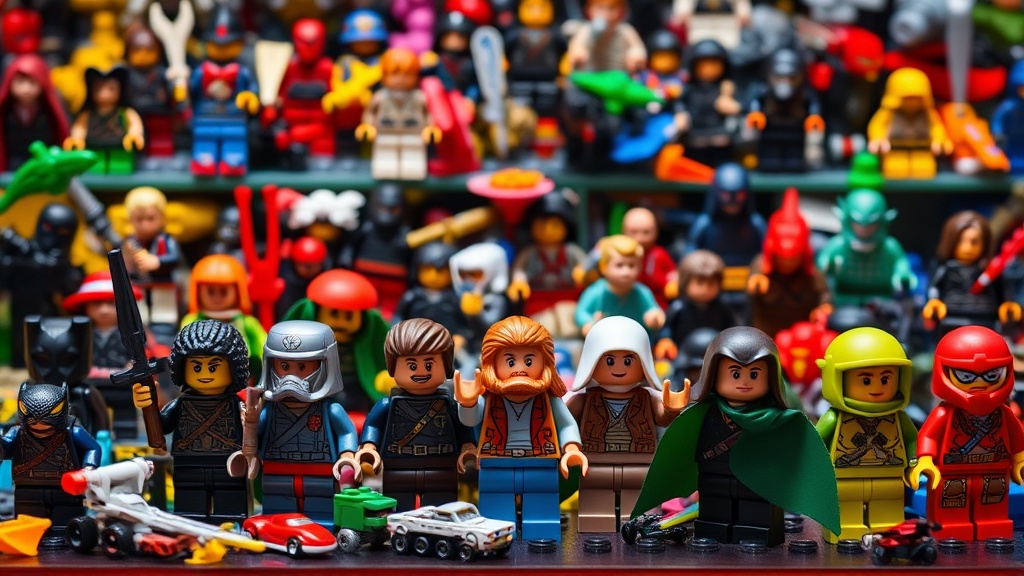
Organizing Your Minifigure Collection by Theme and Color

A single standard minifigure has roughly 20-30 parts, but a collection of 1,000 figures can quickly turn into a chaotic pile of plastic that makes finding a specific character impossible. Organizing your collection is about more than just making it look pretty—it's about preservation and accessibility. This post breaks down how to organize your collection by theme and color to maximize your display space and keep your figures protected.
Why Should You Organize by Theme?
Organizing by theme is the most effective way to categorize your collection based on the intellectual property or the specific "world" the figure belongs to. When you group figures by their source material—like Star Wars, Marvel, or even specific seasonal sets—you create a logical flow that makes sense to other collectors. It also makes it much easier to spot gaps in your collection.
Themed organization is great for collectors who focus on storytelling. If you're a fan of the Star Wars LEGO themes, you likely want your Darth Vader figures standing near their TIE Fighters, not tucked away in a bin of generic city figures. It keeps the "vibe" of your display consistent.
There are two main ways to handle themes:
- The IP Approach: Grouping by the brand or franchise (e.g., Harry Potter, DC Super Heroes).
- The Era Approach: Grouping by the time period or set release (e.g., 2010-era Castle vs. 2020-era Castle).
One thing to keep in mind is that themes can overlap. A figure might fit into a "Space" theme and a "Star Wars" theme simultaneously. In those cases, I usually suggest picking a "primary" home for the figure to avoid confusion. (I've spent way too many hours debating where to put a generic astronaut—it's a rabbit hole!)
How Do You Organize Minifigures by Color?
Color-based organization relies on visual aesthetics rather than the character's identity. This method is perfect for photographers or people who want their display to look like a gradient or a rainbow. It creates a striking visual impact, but it can be a headache if you're trying to find a specific character quickly.
If you decide to go the color route, you'll want to group figures by their most prominent color. For example, all your yellow-skinned classic minifigures go in one section, while your specialized armored figures go in another. It looks incredibly clean on a shelf.
Pros and Cons of Color Sorting:
| Method | Pros | Cons |
|---|---|---|
| Theme-Based | Easy to find specific characters; great for storytelling. | Can look messy if themes have different art styles. |
| Color-Based | Looks visually stunning; great for shelf displays. | Hard to find a specific figure; breaks the "world" of the character. |
Worth noting: If you mix these two methods, you might find a middle ground. You could have a "Star Wars" section that is internally sorted by color. This gives you the best of both worlds—thematic logic with a polished, colorful look.
What Are the Best Display Options for Minifigures?
The best display option depends on whether you prioritize visibility, protection, or space-saving. You need to decide if you want your figures out in the open for guests to see or tucked away in a specialized container.
Here are the most common options I see in the community:
- Acrylic Display Cases: These are the gold standard for protecting your figures from dust. They look professional and can be stacked.
- Rotating Turntables: Great for a "centerpiece" figure, but not practical for a large collection.
- Drawer Units: Using small, clear plastic drawers is perfect for "in-progress" collections or sorting loose parts.
- Custom Shelving: If you have a massive collection, you might need custom-built steps to ensure every row is visible.
If you use acrylic cases, don't forget that light can still be an issue. Even inside a case, UV rays can damage the plastic over time. You might want to check out my post on shielding your minifigures from UV damage to make sure your display stays bright and colorful.
One thing to watch out for is the "shelf sag." If you're using heavy acrylic boxes to stack your figures, make sure the weight is distributed evenly. A heavy pile of plastic can actually bend thin shelving over a few years.
How Much Space Does a Large Collection Need?
The space required depends entirely on whether you are storing them in bins or displaying them on shelves. A collection of 500 figures in a bin takes up very little room, but 500 figures on a display shelf can take up an entire wall.
If you're planning a large-scale display, calculate your "footprint" early. A standard minifigure is roughly 4cm wide. If you want to display 100 figures in a single row, you'll need 400cm of shelf space. That's a lot of wall!
I often see collectors underestimate the depth needed. If you're using tiered displays (where figures sit on "steps"), you'll need more depth than a flat shelf. This prevents the back rows from being completely hidden by the front rows.
When you're buying storage, always look at the dimensions of your actual shelf first. There's nothing worse than buying a beautiful display case only to realize it's two centimeters too tall for your bookcase. It's a frustrating way to spend money.
If you're a "compact" collector, consider using vertical space. A tall, narrow tower of clear drawers is much more efficient than a wide, shallow bin. It keeps the figures upright and prevents them from getting scratched or losing small accessories like capes or weapons.
Don't forget about the accessories! If you're organizing by theme, you need a place for the swords, shields, and tools. I've found that small, transparent jewelry boxes work wonders for keeping a character's gear right next to the figure itself.
Whatever method you choose, the goal is to enjoy your collection rather than constantly searching for a lost piece. Whether you're a color-coded minimalist or a theme-obsessed historian, a little bit of planning goes a long way in keeping your display looking professional.
Steps
- 1
Group by Theme or Universe
- 2
Sort by Color for Visual Impact
- 3
Categorize by Rarity or Value
- 4
Utilize Clear Storage Containers