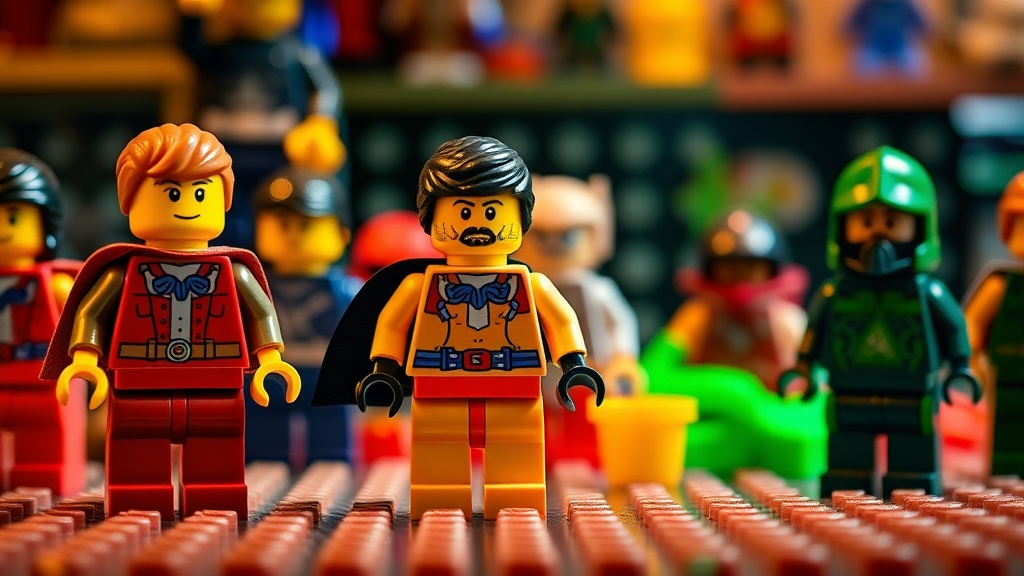
5 Rare LEGO Minifigures Worth More Than You Think

Shadow Boxer - Team GB Olympics 2012
Mr. Gold - Series 10 Limited Edition
Solid Bronze C-3PO - Star Wars Celebration
Silver Batman - Comic-Con 2019 Exclusive
Zombie Minifigure - Series 1 Original Run
Some plastic figurines sit in dusty bins worth less than a cup of coffee. Others—nearly identical to the untrained eye—command prices that would make a vintage Rolex blush. This post examines five LEGO minifigures that have quietly appreciated into serious collector assets, explaining exactly what makes each one valuable and how to spot authentic examples from clever knockoffs.
What Makes a LEGO Minifigure Actually Rare?
Rarity isn't just about age. A 1978 police officer isn't rare—LEGO pumped out millions of those. Real scarcity comes from limited production runs, regional exclusives, convention giveaways, and printing errors that got caught (but not before a few thousand escaped into the wild).
The aftermarket tells the real story. Sites like BrickLink and eBay track actual sale prices—not wishful thinking. A minifigure that sold for $12 in 2015 hitting $800 today? That's rare. That's worth knowing about.
Here's the thing: condition matters enormously. A "new in sealed polybag" Cloud City Boba Fett fetches triple the price of the same figure loose with perfectly good arms. Collectors are picky about scratches, torso cracks, and whether that Cape Cod pattern lines up just so.
Why Is the 2010 Comic-Con Boba Fett So Expensive?
Only 1,500 were made. That's the entire reason.
San Diego Comic-Con 2010 saw LEGO release a chrome-plated Boba Fett in a tiny numbered edition. The figure came in a sealed acrylic case with a certificate of authenticity. No polybag here—this was LEGO acknowledging that adult collectors existed and were willing to pay premium prices.
The chrome finish scratches if you breathe wrong. Most surviving examples never left their cases. Those that did—handled by overeager kids or dealers who didn't understand what they had—often show micro-abrasions that slash value by 40%.
Current market price: $3,500 to $5,200 depending on case condition and whether the COA survived. Compare that to the standard 2010 Boba Fett (roughly $12) and the disparity becomes almost absurd.
"The SDCC exclusives represent LEGO's first real acknowledgment of the adult collector market. Before 2010, these were toys. After? They became assets." — Joe Meno, BrickJournal founder
What's the Deal With Mr. Gold From Series 10?
He's a lottery ticket you could accidentally buy at Target.
LEGO Minifigures Series 10 (released 2013) included a special "Mr. Gold" chase figure. Out of every 5,000 blind bags, one contained this chrome gold trophy-wielding character. Only 5,000 exist worldwide. You couldn't order him directly. You couldn't guarantee finding one. You just kept buying $3 bags and hoping.
The gamble paid off spectacularly for a few lucky collectors. Mr. Gold now trades between $1,800 and $2,400 sealed in his original bag. Opened but pristine? Still $1,200-plus. The catch? Counterfeits flooded the market around 2017—cheap Chinese knockoffs that fooled even experienced collectors until you examined the neck stamp under magnification.
Authentication tips:
- Original Mr. Gold has "LEGO" embossed inside the neck stud—not printed, embossed
- The gold finish has a specific warm tone; fakes tend toward yellow-green
- Sealed bags have LEGO's distinctive crimp pattern and batch codes
Mr. Gold represents pure manufactured scarcity. LEGO could have made 50,000. They chose 5,000. The market responded accordingly.
Which Star Wars Minifigure Costs More Than the Actual LEGO Set It Came In?
The Cloud City Boba Fett (sw0107).
Released in 2003's 10123 Cloud City set—$99 retail at the time—this Boba Fett featured unique arm printing (mandalorian symbols on both arms, not just one) and detailed leg printing absent from other versions. The set itself was mediocre, frankly. A few beige corridors and a carbonite chamber that didn't even fit Han Solo properly.
But that Boba Fett? Unopened sets now sell for $800. The figure alone? $1,200 to $1,800 depending on condition. People literally buy the set, extract the minifigure, and discard the bricks. (Don't do this. Someone wants those beige corridors.)
| Version | Year | Key Differences | Current Value |
|---|---|---|---|
| Standard Boba Fett (sw0002) | 2000 | Single arm print, basic legs | $45 - $70 |
| Cloud City Boba Fett (sw0107) | 2003 | Dual arm prints, detailed legs | $1,200 - $1,800 |
| White Boba Fett (sw0275) | 2010 | Prototype coloring, limited promo | $180 - $250 |
| Chrome SDCC Boba Fett | 2010 | Chrome finish, numbered edition | $3,500 - $5,200 |
The Cloud City figure's value stems from timing. LEGO hadn't yet perfected dual-sided arm printing—this was early, experimental, and never repeated for this specific design. Once the set retired, that was it. No reissues, no remakes. Just 5,000 or so floating around the secondary market.
What About That Shadow Box Employee Gift Everyone Talks About?
The 2019 LEGO Employee Christmas gift—commonly called "Wooden Duck Minifigure"—isn't actually wooden. It's plastic. Very expensive plastic.
LEGO's Billund headquarters produces small batches of exclusive figures for employees annually. These never hit retail. They're not supposed to leave company hands. Yet some always do—gifts from employees to friends, eBay sales by departing staff, the occasional estate sale.
The 2019 figure specifically honors LEGO's original 1935 wooden duck toy. It features:
- A printed duck accessory (wood grain pattern)
- Vintage-style overall printing
- "LEGO employees 2019" printed on the back torso
- Matte finish rather than standard glossy
Only about 1,600 exist. Worth noting: owning one doesn't violate any laws—LEGO can't control gifts after they're given—but the company frowns on public sales. That quasi-black-market status actually drives prices higher. Recent sales on specialized collector forums (not public eBay—too risky for sellers) hover around $2,000 to $2,800.
That said, authentication here is nearly impossible without provenance. Fakes exist. Genuine examples usually come with the original card backing or at minimum, documentation of the employee who originally received it.
Is the 2012 TC-14 Chrome Silver Protocol Droid Worth Collecting?
Yes—but only if you understand what you're buying.
TC-14 appeared as a free promotional giveaway with LEGO Star Wars purchases over $75 in May 2012. The chrome silver finish looks stunning in photos. In reality, it's fingerprint-prone and scratches if you glance at it wrong. Most surviving examples have some swirl marks—that's actually normal and doesn't hurt value significantly.
The real value driver here is completeness. TC-14 came with a black display stand and a printed backdrop card showing the Trade Federation ship interior. Loose figures without accessories sell for $80 to $120. Complete in original polybag with all accessories? $350 to $450.
Here's the thing about chrome figures generally: they're terrible for actual play. The finish flakes, scratches, and shows every imperfection. But as display pieces? As sealed investments? They're among the most liquid assets in the minifigure market. Collectors know exactly what they're getting. There's no mystery, no grading debates like with trading cards. Just a shiny silver droid that'll never be made again.
How Can You Tell If a "Rare" Minifigure Is Actually Fake?
Counterfeits have improved terrifyingly. Ten years ago, fake LEGO felt different—lighter, cheaper plastic, wobbly limbs. Modern knockoffs from certain Chinese manufacturers use nearly identical ABS plastic and replicate the clutch power (how tightly arms and legs connect) with disturbing precision.
The neck stamp remains the most reliable tell. LEGO embosses "LEGO" inside the stud on every genuine minifigure head. Fakes might print it, omit it, or use the wrong font. Check with a jeweler's loupe or strong magnification.
Other authentication markers:
- Color consistency—LEGO's palette is proprietary; fakes often miss by subtle degrees
- Print registration—genuine figures align perfectly; fakes drift slightly, especially on back printing
- Plastic texture—authentic LEGO has a specific slight grip; fakes range from too slippery to too matte
Buy from reputable sellers with return policies. A $1,200 Cloud City Boba Fett on eBay from a seller with 12 feedback and no returns? Walk away. BrickLink's seller rating system offers more protection, though prices typically run 10-15% higher to account for platform fees.
The vintage toy market rewards knowledge and punishes impulse. These five minifigures represent genuine scarcity in a world where LEGO produces 19 billion plastic bricks annually. Finding one in a childhood collection—or spotting an undervalued listing at a garage sale—requires paying attention to printing details, production years, and whether that polybag crimp looks factory-original or suspiciously resealed. The hunt, honestly, is half the point.